Wednesday, May 24, 2023

TN Tour 8: Kanchipuram Extra

Isn’t it so amazing that for a temple town with over a thousand temples, there is only one to a feminine deity? Just the one for the lady Kamakshi, who reigns over the kshetra.

On our ‘extra day’ at Kanchipuram, there was a long list of things to do. The Lord Varadaraja Perumal was first order of business. 

This is a stunning temple complex with some highly intricate sculpture. 

A busload of tourists had arrived and that lengthened the queue time, during which I was able to admire the peeling but still wonderful paintings that covered the walls. 

We went to see the gold and silver lizards, where there was quite a bit of silly shoving not to mention yelling by the guards. I admit I felt a pang of worry with COVID so recently past, to touch them but it didn’t feel right to not do the done thing, either. 

In the main sanctum, the Lord himself was utterly magnificent. The temple has a long history (apparently has around 350 inscriptions from various dynasties) and is one of the 108 divya desams of Vishnu.

Next we asked Raj, our driver, to find us a way to the river. He consulted a local or two, followed a track with some dust raised on it and delivered us, quite without volition, at the Shri Kanchi Kamakoti Peetam. Now this is hallowed ground – the Peetam or Seat was established by Adi Shankara and has an unbroken lineage of 70 acharyas. We must’ve heard that phrase any number of times in our lives. However, somehow, it was not on our ‘Plan A’ checklist. But here we were, and since we were there, we went in. Only to stumble upon grand jayanti celebrations marking the birthday of the Jagadguru Bala Periyava that were underway with all the luminaries of the Peetam on stage. A little abashed, we occupied seats and sat for a while before crouching out in what we hoped was an unobtrusive manner.

We visited the brown riverbed that passes for River Vegavati, once again dismayed at the state of southern rivers. 

+++

That evening we made our way to the Kailashanathar koil. Words fail me as I try to describe the beauty of this wonderful Pallava-era structure. Built with sandstone, this is a square layout of exceptional beauty and balance. 

The lingam is a large and faceted one; I think they said 16, but I cannot be sure. We met an irascible, venerable old man here, one of the priests of the shrine. We fell to talking and he shared a little of what it was like to continue in work that was under appreciated today, brought in far too little… but we could see that he could not imagine his life in any other way but in the service of Shiva.

Around the main shrine, built cunningly into the structure, is a narrow circumambulatory passage. You are required to crouch into the tunnel which encircles the linga, and emerge onto Shiva’s left, a pradakshina that is said to give moksha to those who complete it. A young man before us attempted to clamber up with his backpack still strapped on. “Idé eDu!” our elderly priest chided him. “Remove this! Put it down here! No one is interested in your bag.” It was symbolic. You must drop your baggage if you set off on the path to mukti. 

It reminds me of Kabir:

कबीर का घर सिखर पर जहाँ सिलहली गेल
पाऊँ का टिके पिपील का तहाँ खलकन लादे बैल

On the very peak is Kabir’s home, and every step is treacherous
Even the ant finds the path slippery, how then to take a bullock-cart up?

We sat a while in the dusk, looking at the lovely lines of the temple. It is maintained by the Archaeological Survey of India, with the typical landscaping they deem appropriate for every single site under their domain – lawns dotted with the occasional shrub. But they permit prayers in here, while preserving the structure, so I will not carp too much about that.

We then visited the dargah of Hazrat Syed Shah Hameed Auliya of the Qadri, Chishti order, where we sat awhile. 

Then wandered over to Vaikunda Perumal koil, an atmospheric and very charming temple.

Alas, although it was down the street from our hotel, we could not visit the Chitragupar koil. Said to be an assistant of Yama’s, this gent is responsible for the accounts of our destiny, entries of our good and bad deeds. It is a rare temple and I should have liked to have seen it: Chitragupta, by logic, is a good deity to have in your corner. It was not to be. In any case, it would have been academic. I have turned over all my accounts books to someone else. He will fudge them for me.

Friday, April 14, 2023

Dhanya Ananda Dina

“There he is! Look! Oh my God, illé nintiddare! He’s standing right here!” Shweta and I nudged each other in quick whispers.

Our first ever in-person glimpse of our beloved Guru was of his back. We had entered the open grounds for the launch of five of Sadhguru’s books in Kannada, and he was standing at the back of the venue, facing away from us, speaking to a couple of people. I remembered his shawl, which had snakes going up. In my memory over the years, it had morphed into one large, highly striking snake but alas, the internet’s memory is as good as the elephants’. The video I found gives my remembered image the lie – they were a series of small snakes undulating upwards from the rich border.

Anyhow, there he was and there we were. The start of a love saga of unexpressable sweetness.

+++

In Isha, people are as fond of telling their own stories as they are anywhere else. But if there is one story that everyone will listen to with rapt attention (in fact will poke out of you, if you’re willing to share), it is of how you came to be with Sadhguru. Each story is unique: some are dramatic, some more matter-of-fact, but each is arrestingly interesting to us.

This is our story.

Our mother passed in 2009 and my sister and I dealt with it in different ways. Shweta took up a series of work assignments, I did nothing but stay home and stare at the walls. The sharp grief passed and at one point we looked at each other and wondered what the rest of this life was going to be like. Our spiritual bent was more keenly accented now, and I remember saying, “Rama-Krishna ankonDu iroNa.” Perhaps just turn consciously towards the divine. It would help find guidance in some next life, wouldn’t it?

We were not very learned but this message had rammed home – we needed a Guru. Not someone a little more accomplished, who knew a few more turns on the path, but a full Satguru, the Kaamil Murshid, the Ultimate Guide, the Perfect Master. We were particularly scared of half-baked guidance, having read horror stories of aspirants bogged down at some stage or led disastrously astray by their own accomplishments.  

In November 2010, still unsuspecting, I put up this blog post

Early 2011, we were tripping on the Cricket World Cup. And yet, we talked about how to go about this spirituality business. Having heard that world would have five Satgurus at any time, Shweta said somewhat wistfully, “Surely India would have at least one!”

“This person who writes in the Deccan Chronicle occasionally… he calls himself ‘Sadhguru’,” I said.

The problem with that however was that spirituality is no better than any other area when it comes to quacks and dilettantes. Anybody can stick a grand title to their name, and who can tell? Still… the word ‘Satguru’ is not a magniloquent word to be randomly affixed, it is a specific Office. This man didn’t seem dishonest or so stupid as to be unaware of the consequences of such a travesty. What if… he really was a True Master?

So with the excitement of the world cup playing alongside, we started to watch some videos on Youtube. In those days, Isha’s videos had a particular flute drift as their opening signature and that tune played out repeatedly in our home. By the 7th or 8th video, we knew we’d found him.

We must’ve watched 350-400 videos that month. One of the videos had an end slide announcing an Inner Engineering program with Sadhguru in Mysore in April. Our own people came from around Mysore, and it was Sadhguru’s hometown, moreover where he experienced his Liberation. We registered, booked our train tickets, bespoke a hotel room and landed there on 14th April, a day before the program.

We saw him that very evening at the book launch, sat down and listened as he took questions, and as he left, we followed with folded hands as far as we were allowed. Our first acquaintance with a feeling that was to become very familiar over the years – the wrench that happens in the region of the heart when Sadhguru leaves a space.

15-17 April 2011 changed our lives. We were initiated on Chaitra Poornima. “We didn’t plan it,” Sadhguru chuckled. He never does, but auspiciousness always happens.

12 years (and some ¼-½) is one sun cycle. For sadhakas, this time frame is like a probationary period. Just do what you’re told and stay the course. What crossing it will mean, I have no idea. But it’s a milestone. 


Monday, March 13, 2023

Devis and other things

A new installment of the Tamil Nadu saga was ready but alas, my laptop (newish, just out of warranty period) is showing signs of distress by way of a damaged hinge. I could not take it with me to ashram when I was there for Mahashivratri and since my return to Hyderabad, I've been ill with one thing or the other. 

Since then, Sadhguru has consecrated the Devi Linga Bhairavi in Nepal, and she appears to be a magnificent entity, housed in a most exquisite temple. I am most excited about what her presence will do for that region.


Over the Navratri in 2022, a most wonderful thing happened. I was in Bodoland for most of Dussehra and on Saptami, I found myself in Guwahati, the land of the Goddess Kamakhya. It was a particularly crowded day but I was simply fortunate to be there. After almost 9 hours of waiting in queue, I was able to offer my homage to the lady. Now with Devi Linga Bhairavi (in a slightly altered variation) joining forces in the northeast of the subcontinent... it will be interesting. Nepal is lucky indeed.

***

Are the various overlays not interesting? From seeing this land as a political entity, with its rise and fall of kingdoms, I had moved to being interested in its physical nature the lush fertile plains of the Ganga, the mountain ranges, the rivers that crisscross our Hindustan. Now it appears that the more subtle map of our spiritual hotspots is the thing to follow. 

Where are the radiating hubs? Why are they there? How do they tie together? How do they work together? Is it a boundary, or a network? Where are the holy men and women? How are they dotting the geography? Which shrines are still strong? Which took the brunt of invasions and lost their power and relevance? What idols are lying in wait, hidden in streams, farmers' fields, under rubble... just biding their time to emerge? Wouldn't it be wonderful to able to see these subtle connections? Till my perception sharpens, a lively imagination and conjecture will have to do.

Thursday, January 12, 2023

TN Tour 7: Kamakshi and Ekambareshwara

Late afternoon turned to evening as we arrived at the temple of the Devi Kamakshi.

The story goes that Parvati heard from Shiva about the technical and ritualistic worship that forms the Agamic way. The Agama traditions include yoga, self-realisation, kundalini yoga and asceticism, and she wished to worship the lord in this way. At Kanchi, Shiva had taken abode at the root of a mango tree and that is where Parvati as Kamakshi made a linga from sand and began to woo him with tapas and yogic austerities. Playfully, and perhaps also as a test, Shiva took the form of the Kamba aka Vegavati river and the waters began to surge. Abandoning all her rituals, the Devi embraced the shivalingam to protect it from erosion, and unable to resist her Bhakti, he melted into her. 

Created by me with Dall-e 2

At Kanchi, the Goddess sits in padmasana

We snaked around the shrine in the darshan queue, made our offerings, took darshan. Because the queue wasn’t too bad, we managed to sneak in for another round, hehe. One of the guards was kind to us, and indicated a quiet place on a landing in front of the shrine, permitting us to sit for a while without either being in anyone’s way or our darshan being blocked. She is quite something, Kamakshi.

Adi Shankara is supposed to have installed the Sri Chakra mandala here, and there is a shrine to him to one side, with various sages and rishis depicted along the upper lintel of the structure. These were familiar names to us – the Guru Pooja we chant every day invokes a line of Gurus: Narayana, Padmabhava, Vasistha, Vyasa, Shuka, Goudapada… the Guru Pooja simply poured out of us as we stood there at the twilight hour, the sandhyakala.

We had made good time and bespoke an auto to take us to the Ekambareshwara Temple but what happened there, I wrote about in this earlier post.

***


We returned the next morning and this time, he was in residence. Hardly any people at all and we went right in. 


Now, Ekambareshwara is one of the Pancha Bhoota Stalas of southern India, and is the deity for the element of earth or Prithvi. With Save Soil, Sadhguru was specifically seeking the healing of the earth element. With the rampant use of chemicals, by stripping away verdure and leaving precious topsoil open to all manner of erosion, we have let soil health slide in every corner of the globe. A critical aspect of planetary health that has gone shockingly unnoticed and unaddressed – which is now slowly gaining world attention. Naturally, Ekambareshwara was a very important stop for us.

We went up to the sanctum, requesting an ‘archana’. 

"In whose name?" the priest asked us briskly. We looked at each other, a bit lost as to how to express ourselves. 

“For everyone… for the world…” we fumbled. 

“Ah, ok! Lokahitam?” he prompted. Beneficial to the whole world. 

We nodded rapidly, pleased with his quick grasp of what we needed. Barely pausing a beat, he launched into the most beautiful Sanskrit shloka I’ve heard… fresh air, he asked for, clean rivers that were neither too scarce nor too abundant, bounty for all creatures… prosperity and well-being for humans and mukti for each one at the appropriate time. We were close to tears by the end of it. It was most fitting. I have no idea which source that was from, I was too dazed to ask. We sat for a moment or two and were soon hustled out to make way for the next archana. “Go to the mango tree,” they told us kindly, “you can sit around there as long as you want.”


So we went to the ‘mango tree’ – a dignified arbour that marks the spot of Kamakshi’s penance. This is a beautiful enclosure and here also we prayed for the regeneration of the earth – its soil, its waters, a rise of empathy and consciousness, and for the safety of our Master who was risking life and limb in a brutal journey across continents.

This is a large temple, with long corridors, beautiful columns, high ceilings… we sat for a bit, pondering the massive effort and conviction that went into making these gems that are strewn in the Tamil land. 

Sunday, January 01, 2023

My Experiments with Dall-E

In November 2022, Dall-E 2 was opened to the public without a waitlist. This is a deep learning AI model that generates digital images from natural language descriptions called ‘prompts’. I signed up just to see what the buzz was about and since then, I have been quite thoroughly enjoying the artificial intelligence experience.

A new user gets 50 credits to play around with, after which you get 15 free credits every month – each prompt or variation uses one point. You can buy credits also. I have not yet explored ‘Outpainting’ which is an editor interface that lets you tweak the images that get thrown up with your prompts.

Alas, I did not use my 50 credits too well. First prompts were extremely mundane – a log cabin in the woods, for instance. Nice but meh.


I played a bit with watercolours and some nostalgia. The effects were pretty.

Photo-real images with my rudimentary prompts were a bit hit or miss.


Then I learnt that with its heavy learning material, the AI interface was aware of thousands of artist styles and aesthetics. A muddled prompt for something in the Mughal Art style threw up a pretty but somewhat confused assortment of elements.


I tried a couple of classical elements together: a koel, a mango tree, and an ornate window in the style of Amar Chitra Katha, and I was really pleased with these images.

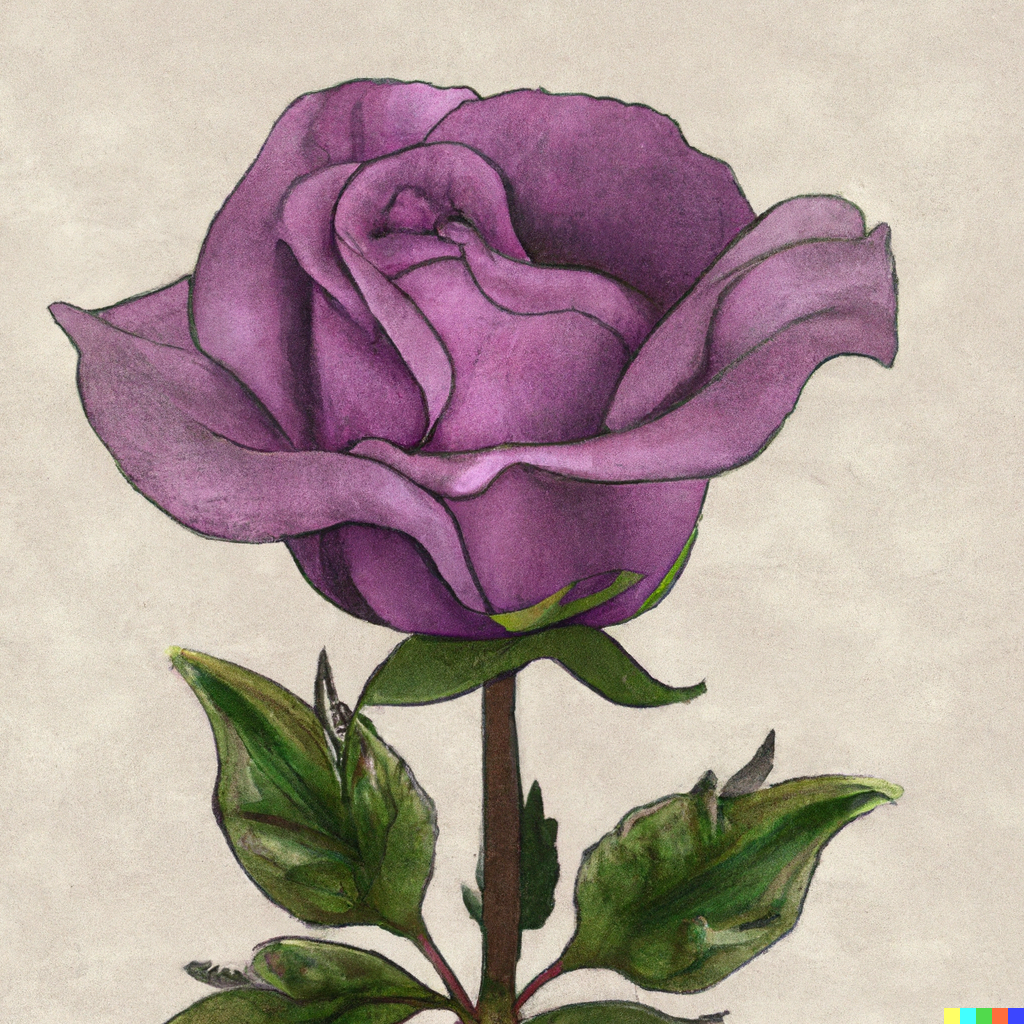
Line drawings were satisfactory, illustrations of flowers in the botanical style were near-perfect and even this render of a phoenix was very acceptable.


I wanted to represent the epic road trips my sister and I undertook last year and I was pretty happy with a couple of results in a cartographic rendering.

As you see from the column on the right, I seized the chance to represent this blog’s title in an expressionist output.

I explored what might emerge if I suggested ‘EH Shepard’ or ‘Raja Ravi Varma’ or ‘MC Escher’.


A photo-real request for a Pallas’ Cat (this gorgeous feline was one of the highlights of the trip we took to Ladakh in August 2022) was quite stunning.  


Since many users were bingeing on androids and ghostly apparitions, I didn't go down too much the futuristic route, although a neon digital art image of a mesmerising phone screen delivered to the brief.

As this column says, we may never have to use stock images again, or struggle to express an abstract idea. I have mourned for years that I cannot draw. Now who cares?

Saturday, December 31, 2022

The Losing Game

In darshan today, my Guru said that all we ever have is time. And that, we are losing, all of us. Can't be transferred, can't be shortened or lengthened, twisted or turned. Use it or not, savour it or not, trickling away at a constant steady rate for all of us. The only thing we have, we are losing. 

Good to remember on this day, this ritual we use to mark time. 

Created by me with Dall-E

A hope and a plea for the new year.

forest path
with each step
a little less of me
Victor Ortiz

Tuesday, December 27, 2022

Picking up the thread

It has been a month since I updated last - the gaps between posts that are supposed to be part of a travel series is much too wide. I had really hoped to write up the Tamil Nadu travelogue at a fast clip.

Work intervened, however, and I went on assignment to Bodoland, the beautiful Autonomous Territorial Region within Assam. 

The Wild Side of Bodoland
(Created by me with Dall-E)

Those stories had to be written and this blog series got pushed down the queue. Then Sadhguru consecrated a wonderful Naga shrine in our new, upcoming center at Bengaluru, which was an unbelievable experience. It rained through out the consecration and there were about 16,000 of us, sitting in the wet, beyond midnight, witnessing the descent of a celestial serpent being. 


After we attended that, I seized the chance to spend a fortnight at the ashram in Coimbatore. 

Long story short, we had left the story at Kanchipuram and will pick it up there again. If nothing, it gives me an excuse to pore over pictures and dwell on the trip.

Thursday, November 24, 2022

TN Tour 6: Divya Desam

It took us a while to get settled in at Kanchipuaram till we got allotted a room that suited us. A late lunch and coffee at the Saravana Bhavan down the street meant that it was only after 5pm that we set out.

The Kamakshi temple was within walking distance. We were asking for directions and negotiating the lanes that would take us to her, when we came upon another temple. We entered, not knowing where we were. However, Kanchi has such a wealth of shrines, I doubt you could throw a peanut and not hit hoary legend. We had somehow chanced upon the fabled Ulagalanda Perumal Temple. 


There are 108 ‘divya desams’ in the Indian subcontinent dedicated to the Lord Vishnu – these are spots that have been extolled in song and verse (mangalasasanam) by the 12 alwars, Tamil Nadu’s most revered poet-saints. This temple – the Ulagalanda Perumal complex, where Vishnu is worshipped as Vamana, the dwarf avatar who vanquished King Bali – houses not one but in fact four divya desams.

My father tells me that ‘ulagam’ is Tamil for the world, ‘alandha’ is ‘the one who measured’ – therefore Ulagalanda Perumal. You know the story of the asura king Mahabali, of course, in which the Lord, in his vamana or dwarf avatar, asked the king for three paces of land. When Mahabali had acquiesced, Vishnu assumed gigantic proportions. One step he took from heaven to earth, the second from earth to the netherworld and asked Mahabali where he should place his next step. The King, bound by his promise, offered his head. He was pushed into the netherworld and the Lord gave him sovereignty over Patalaloka. 

Vamana by Keshav @Krishnafortoday

The main shrine has the most breath-taking relief in black stone depicting Vamana with one leg held aloft to span the skies. It is believed to have been built by Pallavas, with later contributions from Medieval Cholas, Vijayanagar kings and Madurai Nayaks.

My breath hitched with some resonance in the temple. The worship was ardent but apart from the central shrine, the rest of the temple, the outer mantapam etc is rudely maintained, unkempt and messy. A temple of this antiquity, this stature not getting its due attention is simply saddening. It is, of course, under the grip of the notorious Tamil Nadu Hindu Religious and Charitable Endowments Department (HR&CE) – an authority reported to have been so corrupt and inept over the decades, it is in the process of destroying all remnants of this valuable civilization.

This was another strain that threaded our whole journey. On the one hand, we were blown away by the sheer force that the deities still wield, by the throbbing bhakti that has been kept up, in the face of monumental odds. On the other, we were frequently moved to grief at the dilapidation, the criminal neglect, the apathy… In some cases, it was callous disregard, in some others, the utter lack of understanding of what the whole temple complex represents, how it works not as ornamental levels or grandiose architecture but as a subtle energetic mandala.